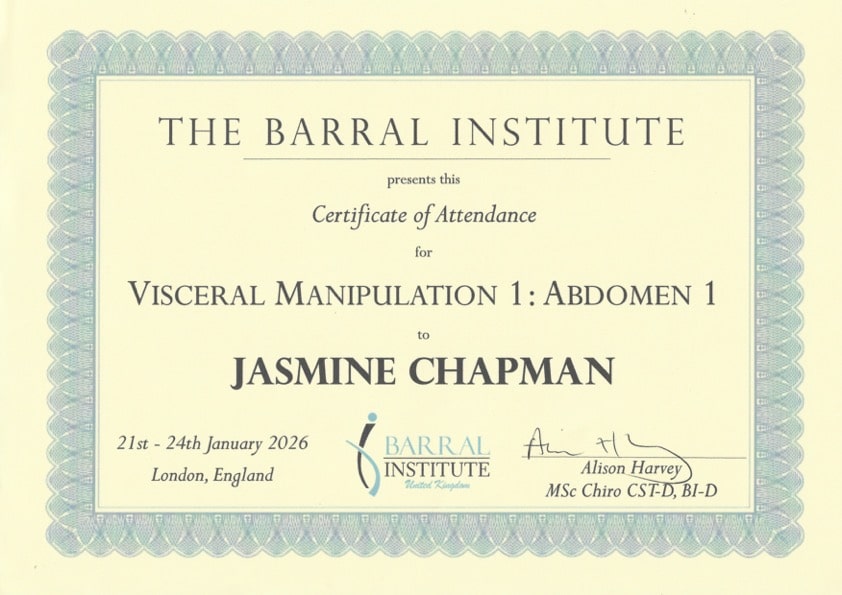
When you think of osteopathy, it is often associated with the treatment of muscles, joints, and nerves. However everything in our bodies is connected, so it’s important to treat other parts of the body too. This is why I decided to complete the visceral manipulation (VM) part 1 course with the Barral Institute. In this article I’ll explain about VM and how it can help you. I also share my personal experience of being a patient receiving VM. I noticed some unexpected changes in my own body, which inspired me to share my experience with you (to skip to the video click here!)
What is visceral manipulation?
Visceral manipulation (VM) explores how the internal organs relate to the rest of the body — particularly the spine, diaphragm, and nervous system. If an organ is under strain or restricted, it may give subtle digestive symptoms, or it could affect the surrounding tissues. For example, the liver can refer pain into the right shoulder.
VM is a manual therapy consisting of gentle, specifically placed techniques to encourage normal tissue function of the organs, which also helps their connective tissues and surrounding areas. Practitioners will assess motion in the organs to see whether there are restrictions or reduced movement.
There are two types of movement your VM practitioner will assess:
Mobility – how an organ moves in response to external forces such as breathing, posture, and everyday movements like bending or twisting.
Motility – subtle motion within the organ itself. It has its own inherent movement and activity that is not influenced by external force.
If there is dysfunction in either type of movement, rather than forcing change, the goal is to listen to these movements and support areas that may feel restricted or under strain.
Do the organs influence muscles and joints?
The abdomen and spine are closely linked through shared fascial connections and nerve pathways. For example, restrictions around digestive organs can sometimes influence how the diaphragm moves, which in turn can affect breathing patterns, posture, and spinal comfort.
This is one reason visceral work may sometimes be considered in combination with standard osteopathy techniques for people with persistent back ache or recurring tension, particularly when symptoms don’t fully respond to more familiar approaches.
What About Digestive Symptoms?
Visceral manipulation may be relevant for some people experiencing digestive-related discomfort such as bloating, feelings of heaviness, or general abdominal tension. Rather than focusing on symptoms alone, osteopaths look at how the organs move, how the diaphragm functions, and how the nervous system responds to stress and strain.
The aim is not to “treat” specific medical conditions, but to support the body’s natural movement and adaptability. Some people describe feeling more comfortable, less restricted through the abdomen, or more able to breathe fully following treatment. As always, everyone’s experience is individual – and this is why I want to share my experience with you!
What Does Treatment Feel Like?
When a practitioner works on improving motility, it feels very gentle and subtle. It can often feel relaxing and calming. Treatment for mobility feels firmer in comparison to motility, but it is still relatively gentle. The practitioners hands are soft, and often they will direct their pressure in the way that feels easiest and most relaxed. It may occasionally feel tender or sensitive if an area is particularly tight, but this feeling is temporary and settles quickly.
Here is my story as a patient
Listen to how VM helped my chronic symptoms of a ‘lump in the throat’ feeling:
Would you like to try Visceral Manipulation?
Visceral manipulation is one part of a wider osteopathic approach. It works alongside medical care and other therapies, with the aim of supporting your body and overall wellness. Every treatment is tailored to the individual, and any approach used is guided by what feels most appropriate for your needs.
If you’re curious about visceral manipulation or wondering whether it might be suitable for you, I’d be happy to have a chat. You can book an appointment here. Alternatively, you can send an enquiry to info@josteopathy.com, or we can talk about it together during your next appointment.
PS: Over the next few years, I am looking to complete parts 2-5 of the visceral manipulation course (part 2 is September 2026!). This will cover other organs in the body, so watch this space!
PPS: Do you have a shoulder issue? Read this guide.
Published 13th February 2026